

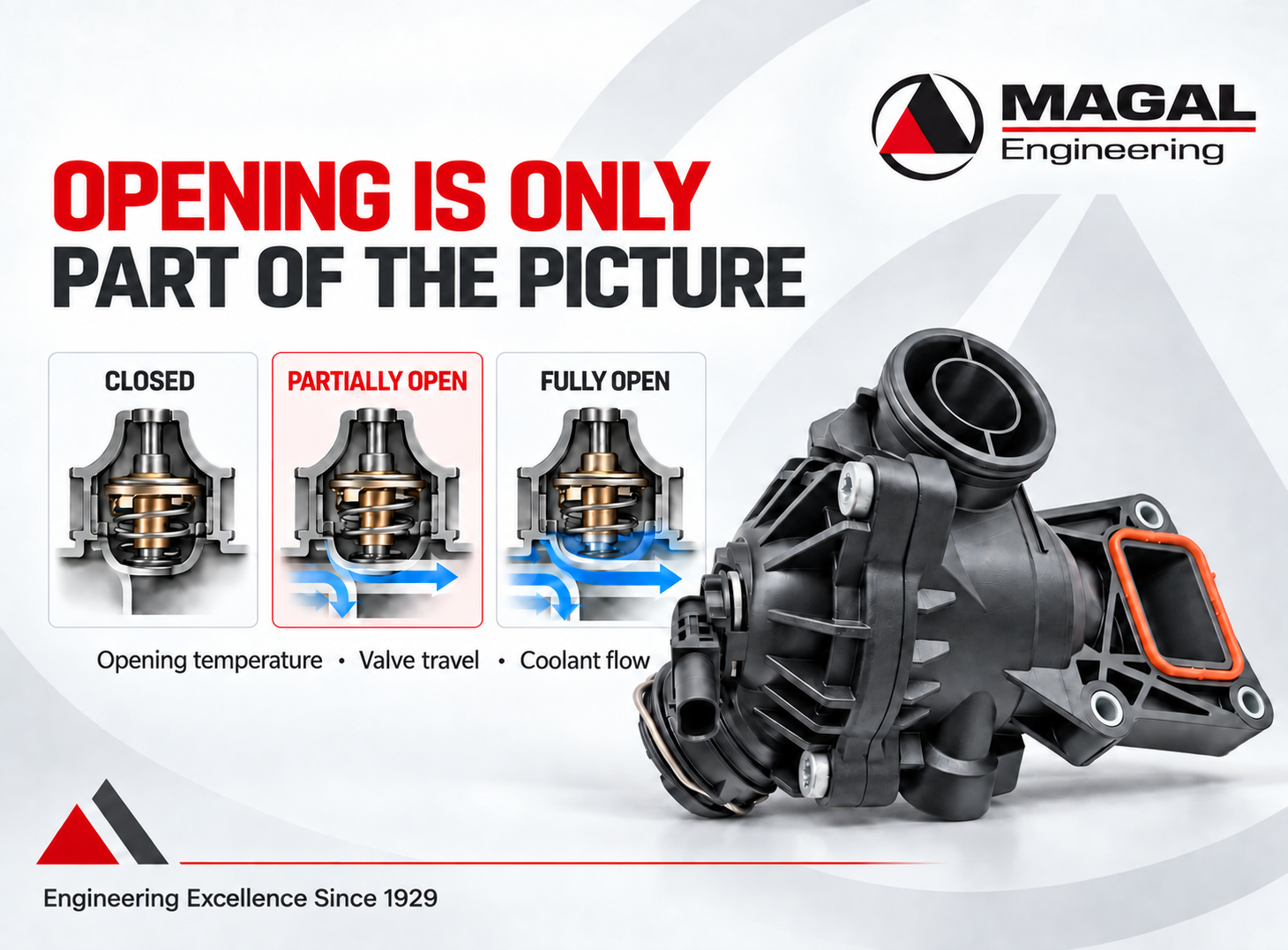
A thermostat that opens is not necessarily operating correctly. While visible movement confirms that the valve is not completely seized, it does not establish whether the component meets the cooling system’s operating requirements.
For repair professionals, this distinction matters. A thermostat can remain mechanically functional while its ability to regulate engine temperature has deteriorated.
Beyond a Simple Open-or-Closed Check
As coolant temperature rises, the thermostat adjusts coolant flow through the radiator. Correct operation depends on more than the valve moving.
A thermostat may begin opening too late, respond too slowly or fail to open far enough. These conditions can restrict radiator flow when additional cooling is needed, potentially contributing to higher operating temperatures or overheating under demanding conditions.
Closing behavior is equally important. A thermostat that does not close properly can allow unwanted radiator circulation during warm-up, delaying the engine’s return to its intended operating temperature.
Signs That Deserve Further Investigation
Potential symptoms of thermostat-related problems include:
- Higher-than-normal engine operating temperature
- Temperature fluctuations as driving conditions change
- Overheating under increased engine load
- Extended warm-up time if the valve remains partly open
- Delayed or inconsistent cabin heating
These symptoms are not exclusive to thermostat faults. Coolant level, trapped air, radiator condition, fan operation and coolant circulation should also be considered during diagnosis.
What Should Be Checked?
A meaningful thermostat assessment should follow the relevant vehicle or component manufacturer’s service procedure. Depending on the thermostat design, the key checks may include:
- Opening temperature: Does the valve begin opening within the specified temperature range?
- Valve travel: Does it reach the specified opening at the required temperature?
- Closing behavior: Does it close correctly as temperature falls?
Electronically controlled thermostats may require additional diagnostic checks. A basic observation of valve movement cannot replace an application-specific assessment.
Correct Fitment Is Only the Starting Point
For aftermarket replacement, matching the housing shape and mounting points is not enough. Temperature specifications, valve characteristics and bypass configuration must also suit the application.
Accurate part selection, consistent component performance and correct installation all contribute to a dependable repair.
At MAGAL, we believe that understanding these details supports better replacement decisions. When evaluating a thermostat, the essential question is not simply whether it opens—but whether it regulates coolant flow as intended.